Saturn hits its closest point Oct. 4 as NYC’s fall sky fills with meteors
The ringed planet is bright enough to beat city light pollution this month, with two meteor showers and a free telescope night at Inwood Hill Park.
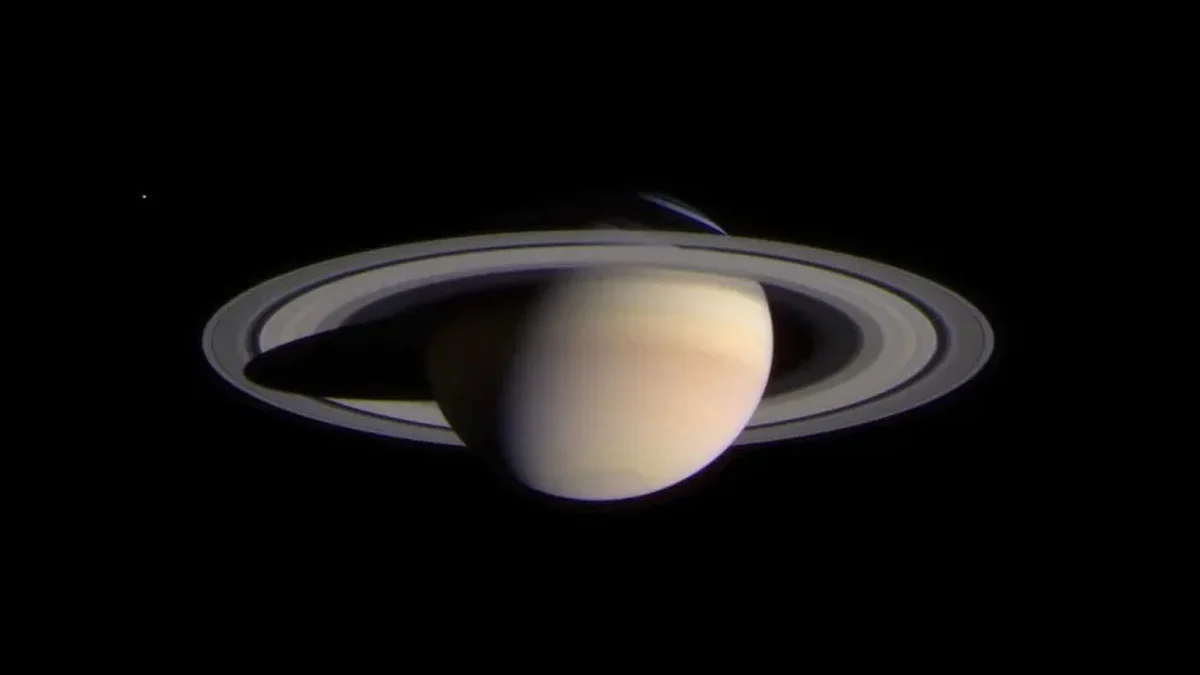
Saturn reaches opposition on Sunday, Oct. 4, the point when the ringed planet sits closest to Earth. That makes it one of the easiest targets in the New York City night sky for the rest of October.
You won’t need a telescope. Neither the city’s light pollution nor a full moon will hide it. Step outside right after sunset, turn to the southeast and look for a bright point of light with a yellowish-orange tint. The American Museum of Natural History’s Jackie Faherty, an astrophysicist, called Saturn “definitely the star of the month” and said good weather makes fall a strong season for stargazing.
The planet should stay a rewarding sight into the winter, according to Bart Fried, who belongs to the American Astronomical Society. Its rings are coming back into view and now tilt at roughly 7.5 degrees.
Draconid and Orionid meteor showers in October
October brings two meteor showers. The Draconids run Oct. 6 through 10 and reach their peak on the night of Oct. 8, with roughly one shooting star every five minutes. A thin crescent moon will keep the sky darker. Fried said the prime window comes early, in the first couple of hours after the sun goes down, so there is no reason to stay up late or set an early alarm.
The Orionids follow with a peak on Oct. 21. These meteors come from debris left by Halley’s Comet, and the shower produces roughly double the Draconids’ count, with faster, brighter streaks that often leave long trails. The moon will be around 75% lit and will drown out some of them, so Fried’s advice is to wait for moonset in the hours before dawn.
Fall constellations are climbing into view as well. Find Cassiopeia, the W-shaped group of stars in the northeast, and Perseus sits right beside it. One of its stars, Algol, carries the nickname demon star. It is really a trio of stars whose light fades and recovers on a regular schedule, roughly once every three days. Cetus, the sea monster and the fourth-biggest constellation of all, sits alongside Perseus over in the southeastern sky.
Free Autumn Starfest at Inwood Hill Park
Anyone who wants a closer look can head to Inwood Hill Park on Saturday, Oct. 24, when the Amateur Astronomers Association stages its 30th annual Autumn Starfest on Pat’s Lawn. Roughly 20 powerful telescopes will be trained on Saturn’s rings, the Andromeda Galaxy and a number of star clusters. Admission costs nothing and all ages are welcome. If it rains, the event moves to the next evening. “Everybody remembers their first view of Saturn,” Fried said.
Quick answers
When is the best time to see Saturn from New York City?
Just after sunset, looking southeast. Saturn reaches opposition on Oct. 4 and stays bright through October and into the winter.
When do the October meteor showers peak?
The Draconids peak the night of Oct. 8, and the best viewing is in the first couple of hours after dark. The Orionids peak Oct. 21 and are best seen in the hours before dawn, after the moon sets.
Is the Autumn Starfest at Inwood Hill Park free?
Yes. The Oct. 24 event on Pat's Lawn is free and open to all ages, with a rain date the next evening.