Council sets Oct. 22 vote on Romanch’s Law to retire Central Park carriage horses by 2028
Romanch's Law would phase out every horse-drawn carriage license by mid-2028 and require a transition plan for drivers. The drivers' union says it falls short.
Speaker Julie Menin said Tuesday that the City Council will vote Oct. 22 on banning horse-drawn carriage rides in Central Park. If the bill passes, the ban starts June 1, 2028.
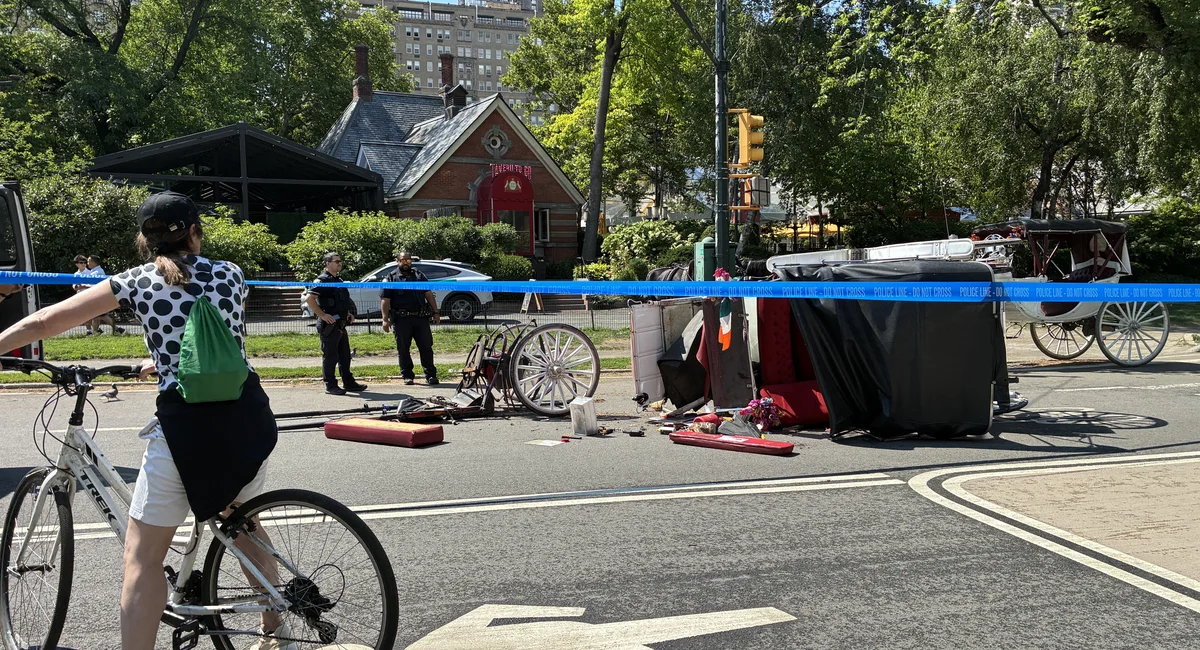
The measure, Romanch’s Law, honors Romanch Mahajan, 18, who died this summer while visiting from India on his family’s first New York trip. The driver got down to photograph the family with the horse, and the animal bolted. Mahajan was thrown and struck his head on the pavement. A few weeks earlier, a carriage horse named Deniz had collapsed and died. The Central Park Conservancy counted Mahajan’s death as the eighth incident involving horses in the park in a little more than a year.
What the NYC carriage horse ban would change
No new licenses or renewals would be issued, and all current ones would lapse no later than May 31, 2028. Temporary exhibits, performances and displays are exempt. Drivers who keep working for hire after the cutoff could be fined hundreds of dollars, sent to jail for as long as 15 days, or both. A civil violation carries a penalty of $10,000 or more.
The administration would also owe a transition plan for carriage workers by April 1, 2027. The speaker’s office called that a key change from earlier versions and said the plan would cover job placement, training, career counseling, education and financial compensation. The horses’ fate is still unclear.
“The tragic and preventable death of 18-year-old Romanch Mahajan made clear that the status quo is no longer acceptable,” Menin said in a statement.
Who backs the bill and who opposes it
Council Member Chris Marte sponsors the bill. A majority of the 51-member Council already backs it, and so does Mayor Zohran Mamdani. City Hall said it has worked with the Council, union partners, drivers, animal welfare advocates and community leaders on a transition that protects workers. The Central Park Conservancy first endorsed a ban last year. Two previous mayors, Bill de Blasio and Eric Adams, attempted to end the industry and could not.
The Transport Workers Union, which represents the drivers, is against the bill. “The bill offers no real economic relief for the families who worked their whole lives in this industry,” union president John Samuelsen said. He also faulted the bill for only asking the city to consider compensating owners who paid hundreds of thousands of dollars for city-issued medallions.
NYCLASS, an animal rights group that has protested the drivers for years, welcomed the vote. Its leader, Edita Birnkrant, called it a long-fought win. The vote comes as officials try to manage bikes, e-bikes and pedestrians on the park’s loop drive. Crashes there have killed three people since June, Mahajan among them.
Quick answers
When would the Central Park carriage horse ban take effect?
If the Council passes the bill, the ban would start June 1, 2028. All current licenses would lapse no later than May 31, 2028.
When does the City Council vote on the carriage horse ban?
The vote is set for Oct. 22, Speaker Julie Menin announced.
What happens to carriage drivers under the bill?
The administration would have to produce a transition plan by April 1, 2027. The speaker's office says it would include job placement, training, counseling, education and financial compensation.