New York joins federal scholarship tax credit as Hochul overrides teachers unions
Donors to scholarship groups can get up to $1,700 back, or $3,400 for couples. Teachers unions and legislative leaders wanted the state to stay out.
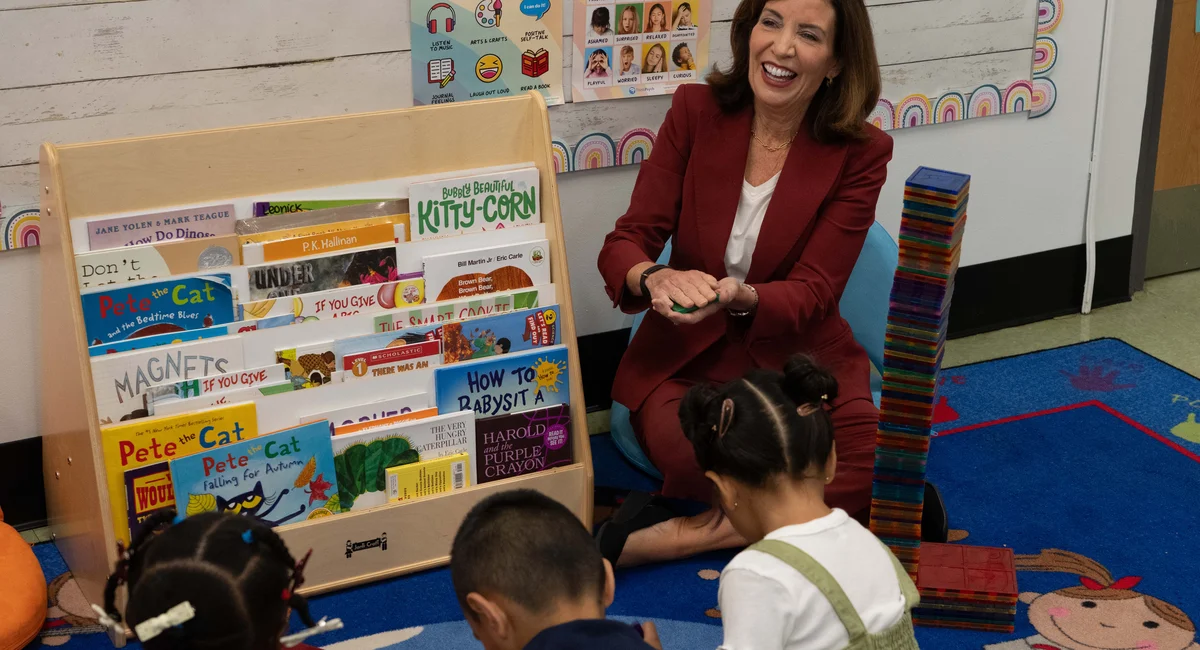
Gov. Kathy Hochul said Friday that New York will take part in the federal “school choice” tax credit program created under President Donald Trump. The move lets state taxpayers claim a credit for money they donate to groups that award education scholarships.
Teachers unions had pressed the state to stay out, warning that the program will pull students and dollars away from public schools. The credit comes from the One Big Beautiful Bill Act, the sweeping package that Trump and Congress enacted in 2025.
How the New York school choice tax credit works
A person filing alone can recover as much as $1,700 for a gift to a “scholarship granting organization,” and married couples filing jointly can recover as much as $3,400. Those groups may then fund scholarships at private or religious schools, or pay for services like tutoring and after-school programs. A family qualifies if its income is no more than three times the median for its area.
Programs like this one have mostly benefited private schools. The governor’s office said New York’s version will help families in both public and private schools. In a statement, Hochul said a review of the federal rules convinced her office the program could bring millions of dollars to students without cutting money from public schools or from state and local budgets. “I’m not going to leave money on the table when it could help our kids,” she said.
Unions, NAACP and legislative leaders opposed
Michael Mulgrew, who heads the United Federation of Teachers, the city’s teachers union, called the decision “a failure of leadership.” The national union went further. Its leader, Randi Weingarten of the American Federation of Teachers, spent months pressing state executives nationwide to turn the credit down.
The NAACP fought the program too, arguing it will speed the exit of better-off families from public schools and deepen inequity and segregation. The group’s officials drew a comparison with the way white families abandoned some Southern public schools after Brown v. Board of Education, the Supreme Court ruling that ordered desegregation.
Albany’s top lawmakers weighed in over the past few days as well. Assembly Speaker Carl Heastie, a Bronx Democrat, and state Senate Majority Leader Andrea Stewart-Cousins each released statements against joining. Heastie said the state should keep investing in the public schools that teach the vast majority of its children. Major unions supporting Hochul’s re-election bid had also asked her to opt out. The governor’s interest in the program dates to last spring, when she raised the idea during a meeting with Agudath Israel of America, an organization that supports religious education in the Jewish community.
Quick answers
How much is the New York school choice tax credit?
Individuals can get up to $1,700 back for donating to a scholarship granting organization, and married couples filing jointly can get up to $3,400.
Who can receive the scholarships?
Families whose income is no more than three times their area's median income can qualify. The scholarships can pay for private or religious schools or for services such as tutoring and after-school programs.
Why do teachers unions oppose it?
Unions say the program will pull families and money away from public schools. UFT president Michael Mulgrew called Hochul's decision a failure of leadership.