City Hall’s antisemitism strategy doubles hate crime grants but leaves the term undefined
A 35-page plan from the Mamdani administration pays for hate crime prevention, security at houses of worship and Jewish cultural projects. It does not define antisemitism.
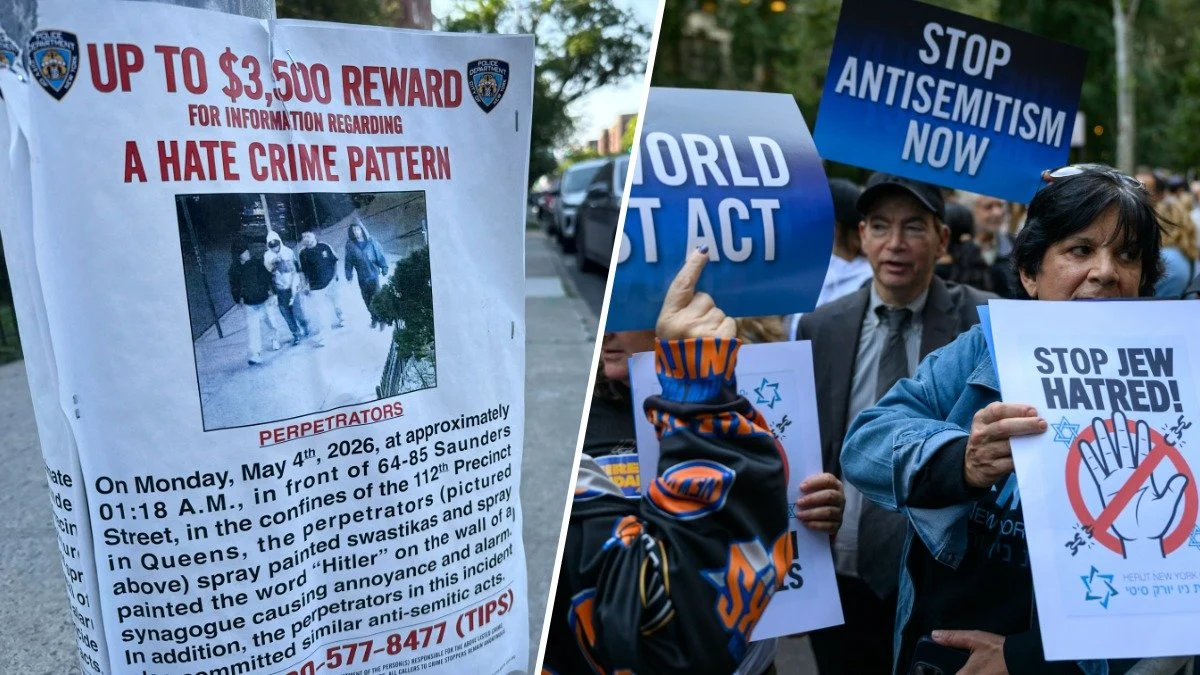
On Tuesday, City Hall published a 35-page strategy against antisemitism in New York City, with millions set aside for prevention, security and education. It leaves out a formal definition of antisemitism.
The Mayor’s Office to Combat Antisemitism produced the document, which Mayor Zohran Mamdani’s administration calls a “whole-of-government” approach. Mamdani has said no other city in the country has released a plan like it.
Where the NYC antisemitism plan puts its money
The largest sum, $6.4 million, flows through the Partners Against the Hate grant program to community groups that prevent hate crimes and support survivors. That is double what those groups received last year. Another $1 million will strengthen security at synagogues and other houses of worship. The city is also bringing back the Security Infrastructure Working Group, an interagency team that had been disbanded, to give cultural institutions technical and strategic security advice.
Culture and schools get funding too. The city will put $2 million toward completing a Holocaust memorial in Queens. A Central Brooklyn community space still in the planning stage, called the Center for New Jewish Culture, will receive $2.5 million. City Hall aims to enroll more eighth graders in a program offering free visits to the Museum of Jewish Heritage, and it will work with schools to investigate bias or discrimination complaints against any student. Messages on LinkNYC kiosks and in other public spaces will explain the city’s Human Rights Law and how to bring a complaint to the City Commission on Human Rights.
Why the plan skips a definition of antisemitism
According to the plan, the city can fight antisemitism with the tools it already has, without adopting a definition. That choice sidesteps a heated argument over whether some criticism of Israel’s actions in Gaza and the West Bank counts as antisemitism. The Anti-Defamation League had asked the mayor to include a definition. Other groups, including some Jewish organizations, argue that the International Holocaust Remembrance Alliance definition wrongly treats anti-Zionism as antisemitism. Former Mayor Eric Adams adopted that definition by executive order, and Mamdani revoked the order days after taking office. The plan cites a Biden administration framework instead, which describes antisemitism as “a stereotypical and negative perception of Jews.”
The strategy arrives as attacks on Jewish New Yorkers rise. NYPD figures show antisemitic hate crimes up 9% from last year. Jews make up about 10% of the city’s population, but they were the targets in more than half of confirmed hate crimes. Less than a week earlier, Israeli Prime Minister Benjamin Netanyahu used his UN General Assembly speech to call Mamdani antisemitic. In a video announcing the plan, the mayor said: “Time and again, I’ve heard the same thing: Antisemitism is real, and it is growing.”
Quick answers
Does NYC's antisemitism plan define antisemitism?
No. The plan says the city can fight antisemitism with its existing tools and no definition, though it cites a Biden administration framework.
How much money is in the plan?
It includes $6.4 million in hate crime prevention grants, $1 million for security at houses of worship, $2 million to complete a Queens Holocaust memorial and $2.5 million for a planned Central Brooklyn cultural center.
Where can New Yorkers report discrimination?
Complaints go to the City Commission on Human Rights. A public campaign will explain the city's Human Rights Law and how to file one.