NYC Council AI bills would require a kill switch and outside testing
Speaker Julie Menin's bills would fine unvalidated AI use $25,000 per case and reward whistleblowers, ahead of an Oct. 5 hearing with tech CEOs invited.
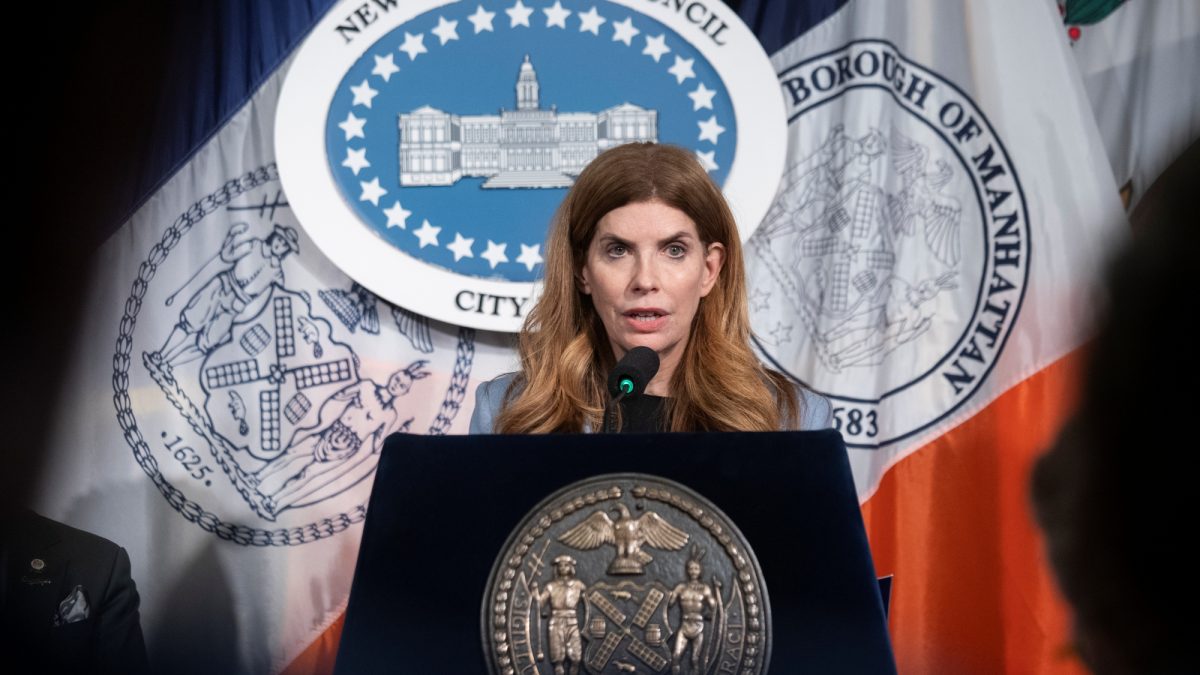
New York City Council Speaker Julie Menin on Friday rolled out a set of bills meant to regulate artificial intelligence. They arrive ahead of an Oct. 5 hearing of the full Council, to which the chief executives of leading AI companies have been invited.
Under the proposals, AI systems would need approval from an outside validator before businesses could use them, and every system in the city would have to carry a “kill switch.” Another measure would reward whistleblowers, a program the Council calls the first of its kind in the nation.
What the NYC AI bills would require
Intro. 26835, sponsored by Menin, targets companies that sell, promote or deploy AI in New York City. Unless a third party has validated the system first, all three would be banned. Validators would look at privacy and security, the quality of the underlying data, possible bias and the decisions the system produces, plus any other standards the Council’s Cyber Command sets. They would also have to reveal any conflicts of interest.
The bill describes the kill switch as a human override able to turn a system off, and validators would need to confirm it exists. Each time a system reaches the market or is put to use without validation, or a validation turns out to be falsified, both the business and the validator would owe $25,000.
A separate Menin bill, Intro. 26887, would give whistleblowers a share of the fines collected from AI companies that break the law. Intro. 26834, from Council Member Virginia Maloney, would allow people to sue AI companies over “foreseeable harms” that result when someone misuses the tools with malicious intent or gets around their safety controls, a practice known as jailbreaking.
Oct. 5 Committee of the Whole hearing
The Council will sit as a Committee of the Whole, an unusual format that combines all of its subcommittees and is saved for top-priority matters. Menin’s letters went to Sam Altman of OpenAI, Dario Amodei of Anthropic, Elon Musk of SpaceXAI, Mark Zuckerberg of Meta and Sundar Pichai of Google. They asked each to take part and noted that the Council could use its subpoena power if necessary.
The bills land in the middle of a broader argument over how governments should keep up with a technology that is advancing quickly. A number of prominent AI figures have urged a slower pace, and the Trump administration has pushed back against proposals to put rules on the industry.
Quick answers
When is the NYC Council hearing on AI?
On Oct. 5, when the full Council meets as a Committee of the Whole.
What is the penalty under the proposed AI validation bill?
Both the business and the validator would owe $25,000 each time a system is sold, promoted or used without validation, or a validation is falsified.
Who was invited to the hearing?
Menin wrote to Sam Altman, Dario Amodei, Elon Musk, Mark Zuckerberg and Sundar Pichai asking them to take part.